
Are you tired of feeling like you need to “pick one thing” to be successful? This comprehensive guide will show you how to embrace your multi-passionate nature and create a goal-setting system that honors all your creative interests.
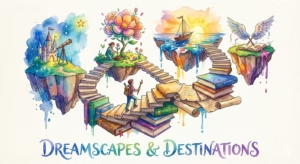 If you’ve ever been told to “focus on one thing” or felt guilty about having multiple creative interests, this article is for you. As a multi-passionate creative, you don’t need to choose just one path—you need a different approach to goal setting that celebrates your diverse talents and helps you thrive across multiple domains.
The Multi-Passionate Creative Dilemma
You know you’re a multi-passionate creative if:
- You have 3-5 different creative projects running simultaneously
- You get excited about new ideas faster than you can finish current ones
- You feel energized by variety and bored by repetition
- People ask you “What do you do?” and you struggle to give a simple answer
- You’ve been told you need to “pick a lane” but the thought makes you feel trapped
Research shows that people typically report being passionate about 2-4 activities, and those with multiple passions often have higher levels of openness to experience—a personality trait linked to creativity and innovation (Journal of Happiness Studies, 2021).
The good news? Your multi-passionate nature isn’t a flaw to fix—it’s a superpower to harness.
Why Traditional Goal Setting Fails Multi-Passionate Creatives
Most goal-setting advice assumes you have one primary focus, but multi-passionate creatives operate differently:
The Problems with Traditional Approaches:
- Linear thinking doesn’t match your cyclical creative energy
- Single-focus frameworks ignore your need for variety
- Rigid timelines don’t account for creative seasons and inspiration cycles
- Comparison metrics are designed for specialists, not generalists
- Burnout prevention isn’t built into most systems
As creativity coach Ellie Chaney notes: “Being multi-passionate can bring so much excitement and adventure, but it can also lead to moments of paralysis and uncertainty about what to do next.”
The Multi-Passionate Goal-Setting Framework
Phase 1: Creative Inventory and Values Alignment
Step 1: Map Your Current Interests Create a comprehensive list of all your creative interests without judging them as “serious” or “just hobbies.” Include:
- Active projects
- Dormant interests you’d like to revisit
- New areas you’re curious about
- Skills you want to develop
Step 2: Identify Your Core Values For each interest, ask:
- What underlying value does this serve? (e.g., beauty, justice, connection, freedom)
- Is this intrinsically motivated or driven by external validation?
- How does this align with my authentic self?
Step 3: Look for Connection Points Multi-passionate creatives thrive at intersections. Ask:
- How might my background in photography inform my approach to graphic design?
- Could my love of writing enhance my marketing skills?
- Where do my different interests naturally complement each other?
Phase 2: The Creative Seasons Framework
Instead of annual goals, think in creative seasons—12-week sprints that align with your natural energy cycles.
The Four Creative Seasons:
🌱 Spring (Weeks 1-12): Exploration & Ideation
- Focus: New projects, learning, experimentation
- Energy: High curiosity, lots of ideas
- Goals: Start 2-3 new projects, take courses, network
☀️ Summer (Weeks 13-24): Production & Growth
- Focus: Deep work, major project completion
- Energy: Sustained focus, high productivity
- Goals: Complete 1-2 major projects, build systems
🍂 Autumn (Weeks 25-36): Harvest & Refinement
- Focus: Finishing, polishing, sharing work
- Energy: Reflective, detail-oriented
- Goals: Launch projects, gather feedback, iterate
❄️ Winter (Weeks 37-48): Rest & Planning
- Focus: Recovery, reflection, strategic planning
- Energy: Lower, contemplative
- Goals: Rest, plan next year, maintain existing work
Phase 3: The Portfolio Approach to Goal Setting
Think of yourself as a Creative Portfolio Manager. Just like a financial portfolio, you want:
- Core holdings (20-30%): Your primary creative focus
- Growth investments (40-50%): Developing skills and projects
- Speculative plays (20-30%): Experimental projects and new interests
Example Portfolio:
- Core (30%): Freelance graphic design business
- Growth (40%): Developing illustration skills, building online course
- Speculative (30%): Learning pottery, writing children’s book
Phase 4: The Energy-Based Planning System
Multi-passionate creatives have unique energy patterns. Plan around yours:
High Energy Days:
- Tackle complex creative work
- Start new projects
- Make important decisions
- Network and collaborate
Medium Energy Days:
- Administrative tasks
- Skill-building activities
- Routine creative work
- Planning and organizing
Low Energy Days:
- Research and inspiration gathering
- Simple, repetitive tasks
- Rest and reflection
- Maintenance work
Practical Strategies for Multi-Passionate Success
1. The Theme Day System
Assign different days to different creative focuses:
- Monday: Business development
- Tuesday: Design projects
- Wednesday: Writing
- Thursday: Learning/courses
- Friday: Experimental projects
2. The 3-2-1 Rule
At any given time, maintain:
- 3 active projects (different stages of completion)
- 2 learning goals (skills you’re developing)
- 1 experimental interest (something completely new)
3. The Creative Sprint Method
Work in focused 25-90 minute sprints on single projects, then switch. This prevents boredom while maintaining progress across multiple areas.
4. The Intersection Strategy
Actively look for ways to combine your interests:
- A photographer + writer might create photo essays
- A designer + musician might create album artwork
- A baker + blogger might start a food photography business
Overcoming Multi-Passionate Challenges
Challenge 1: “Shiny Object Syndrome”
Solution: The Idea Parking Lot
- Keep a dedicated notebook for new ideas
- Review monthly and decide which to pursue
- Set a limit: Only start new projects during designated “exploration” seasons
Challenge 2: Feeling Scattered
Solution: The Weekly Focus Framework
- Choose one primary project per week
- Spend 60% of creative time on the primary project
- Use remaining 40% for other interests
Challenge 3: Imposter Syndrome
Solution: Reframe Your Identity
- Instead of “I’m not focused enough,” try “I’m a creative synthesizer”
- Instead of “I can’t pick one thing,” try “I create unique value through diverse skills”
- Instead of “I’m scattered,” try “I’m adaptable and innovative”
Challenge 4: Burnout from Overcommitment
Solution: The Energy Audit As designer Shira Bentley advises: “Your time is a resource. Spend it like you would your budget.”
Monthly Energy Audit Questions:
- Which projects energize me vs. drain me?
- Where am I saying yes out of obligation rather than excitement?
- What can I delegate, automate, or eliminate?
- How can I build more rest into my schedule?
The T-Shaped Creative Professional
Develop yourself as a T-shaped professional:
- Vertical bar: Deep expertise in one core area
- Horizontal bar: Broad knowledge across multiple disciplines
This gives you:
- Credibility through demonstrated expertise
- Flexibility through diverse skills
- Unique value through cross-disciplinary thinking
- Career security through multiple income streams
Creating Your Multi-Passionate Action Plan
Week 1: Assessment
- Complete your creative inventory
- Identify your core values
- Map your energy patterns
- Assess your current project load
Week 2: Design Your System
- Choose your primary framework (seasons, themes, or sprints)
- Set up your tracking system
- Create your idea parking lot
- Design your workspace for multiple projects
Week 3: Implementation
- Start with one new system element
- Track your energy and productivity
- Adjust based on what you learn
- Celebrate small wins
Week 4: Optimization
- Review what’s working and what isn’t
- Make necessary adjustments
- Plan your next creative season
- Set up accountability systems
Tools and Resources for Multi-Passionate Creatives
Digital Tools
- Notion: (https://notion.com/) Create a multi-project dashboard
- Trello: (http://trello.com) Visual project management across interests
- Toggl: (http://toggl.com) Track time across different creative areas
- Evernote: (http://evernote.com) Capture ideas and inspiration
- Calendly: (http://calendly.com) Block time for different creative focuses
Analog Tools
- Bullet Journal: Flexible system for multiple projects
- Project Binders: Physical organization for each interest
- Inspiration Boards: Visual motivation for different areas
- Time-blocking Planner: Schedule creative sessions
Learning Resources
- Skillshare: (http://skillshare.com) Explore new creative skills
- MasterClass: (http://masterclass.com) Deep dives with expert creators
- YouTube: (http://youtuble.com) Free tutorials across all creative disciplines. Be sure to use multiple searches to find what you want as you never know what people will label their video!
- Local workshops: Hands-on learning and community
- Online communities: (Facebook, Meetup, Instagram, etc.) Connect with other multi-passionate creatives
Success Stories: Multi-Passionate Creatives Who Made It Work
Case Study 1: The Creative Entrepreneur
Background: Graphic designer + photographer + business coach
Strategy: Used the portfolio approach—design as core income, photography for passion projects, coaching as growth area
Result: Built a six-figure business combining all three interests
Case Study 2: The Renaissance Professional
Background: Writer + web developer + musician
Strategy: Developed T-shaped expertise—deep in web development, broad in creative fields
Result: Became a sought-after creative technologist for arts organizations
Case Study 3: The Creative Educator
Background: Artist + teacher + course creator
Strategy: Used the intersection approach—combined art skills with teaching ability to create online courses
Result: Built a sustainable income teaching what she loves
Measuring Success as a Multi-Passionate Creative
Traditional metrics don’t always apply. Instead, track:
Quantitative Metrics
- Project completion rate across all interests
- Skill development progress in each area
- Income diversification across creative streams
- Time allocation between different projects
Qualitative Metrics
- Energy levels and creative satisfaction
- Learning and growth in various areas
- Connection and synthesis between interests
- Alignment with values and authentic self
The Multi-Passionate Success Formula
Success = (Completed Projects × Skill Growth × Energy Alignment) ÷ Overwhelm Factor
Common Myths About Multi-Passionate Creatives
Myth 1: “You’ll never be as good as specialists”
Reality: You’ll be uniquely valuable because of your diverse perspective and ability to connect ideas across disciplines.
Myth 2: “You need to pick one thing to be successful”
Reality: Many successful people have portfolio careers that leverage multiple interests and skills.
Myth 3: “Multi-passionate people are just unfocused”
Reality: You have a different type of focus—one that spans multiple areas rather than drilling deep into one.
Myth 4: “You can’t make money with multiple interests”
Reality: Diverse skills often lead to more income streams and greater financial security.
Building Your Multi-Passionate Community
Success as a multi-passionate creative is easier with support:
Find Your Tribe
- Online communities: Facebook groups, Reddit communities, Discord servers
- Local meetups: Creative professionals, entrepreneurs, artists. (meetups.com, meetup app, local libraries, church groups.)
- Professional organizations: Industry groups that welcome diverse backgrounds
- Mastermind groups: Small groups of creatives supporting each other’s goals
Create Accountability Systems
- Creative partnerships: Pair with another multi-passionate creative
- Progress sharing: Regular check-ins with friends or mentors
- Public commitment: Share goals on social media or blog
- Professional coaching: Work with someone who understands your unique challenges
The Future of Multi-Passionate Careers
The creative economy increasingly values:
- Cross-disciplinary thinking
- Adaptability and learning agility
- Unique perspectives and approaches
- Innovation through synthesis
- Portfolio careers and multiple income streams
As the world becomes more complex and interconnected, multi-passionate creatives are uniquely positioned to thrive.
Your Multi-Passionate Manifesto
I am not scattered—I am diverse. I am not unfocused—I have a different kind of focus. I am not indecisive—I am exploring possibilities. I am not doing too much—I am living fully. I am not a jack-of-all-trades—I am a master of synthesis.
Taking Action: Your Next Steps
- Download the Creative Clarity Workbook to organize your ideas and priorities
- Choose one framework from this article to implement this week
- Set up your tracking system to monitor progress across projects
- Find one accountability partner who understands your multi-passionate nature
- Schedule your first creative season using the 12-week framework
Final Thoughts: Embracing Your Creative Renaissance
You don’t need to apologize for having multiple interests or feel guilty about not fitting into traditional career boxes. Your multi-passionate nature is not a bug—it’s a feature.
In a world that often demands specialization, you bring something unique: the ability to see connections others miss, to innovate at intersections, and to adapt to changing circumstances with grace and creativity.
The key is not to fight your nature, but to work with it. Create systems that honor your need for variety while ensuring progress toward your goals. Build a career that celebrates all of who you are, not just one narrow slice.
Your creative renaissance is waiting. It’s time to stop trying to fit into someone else’s box and start building your own.
Ready to transform your multi-passionate chaos into creative clarity? Start with one small step today. Your future self—and all your creative interests—will thank you.
Shameless plug here: Check out my books:
- The Micro Goal Method: A Practical Companion to small Steps, Big Changes
- Unstuck & Unstoppable: Practical Goal Setting for Women Who Want More
- Unstuck & Unstoppable Workbook: Practical Goal Setting for Women Who Want More
- Recovery Map: Recovery Map A Practical Guide to Rebuilding After Depression
Resources and Further Reading
Books:
- “The Renaissance Soul” by Margaret Lobenstine
- “Refuse to Choose!” by Barbara Sher
- “The Multi-Hyphen Method” by Emma Gannon
- “Range” by David Epstein
Websites and Communities:
- Puttylike.com (Community for multipotentialites)
- Creative Live – Online creative courses)
- The Freelancer’s Union – Support for creative professionals
- AIGA – Professional association for design
Tools Mentioned:
- Creative Clarity Workbook: https://www.eleanorchaney.com/creative-clarity-workbook
- Notion: https://www.notion.so
- Trello: https://trello.com
- Toggl: https://toggl.com
Professional Development:
- Local creative meetups (search Meetup.com)
- Online courses (Skillshare, MasterClass, Coursera)
- Creative conferences and workshops
- Mentorship programs in your areas of interest
Remember: Your multi-passionate nature is your superpower. Use it wisely.