
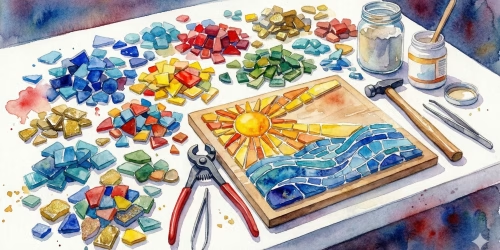
Supplies:
As with any art or craft, there are basic supplies you will need to get started. This is a list for a beginner mosaic artist. As you gain more experience, you may wish to try specialty products not addressed here.
- Surface
- Tile (approximately the same thickness if possible) – I will refer to this as “tile” in the article, but it can be made of many different surfaces, including traditional Tesserae including Vitreous Glass or “Venetian glass”, Gold and Silver Leafed tile made by sandwiching gold, silver, copper or gold-alloy leaf between a clear tile and a colored (generally a transparent yellow, green or blue) base, Smalti (a handmade opaque glass), broken dishes, mirror, jewelry, CD pieces, stone or pebbles, glass, shells, or marbles, for example. DIY stores can be a good resource for inexpensive tile for larger pieces. Craft stores offer kits and smaller tiles and glass in packages.
- Hammer or Tile Nippers
- Leather padded garden gloves
- Protective Eye Glasses
- Tile adhesive
- Spatula, Palette Knife, or Grouting Tool
- Rubber or Latex Gloves
- Grout
- Sponge
- Sealant (optional, but highly recommended!)
Before You Begin
Mosaics may be applied to nearly any sturdy surface, so when selecting a base think about a few specific features. Is it strong enough to hold the weight of the tile, adhesive, and grout? Does the shape have sufficient area to showcase the mosaic? Keep in mind that slight curves are easier to mosaic than surfaces with more extreme curves. Is the base porous enough to allow an adhesive to adhere the mosaic pieces?
Commonly used base materials include Wood, Terracotta, Cement, Glass: (flat sheets of window glass in a frame or tray, or glass items like bowls, votives, or plates), fixtures, plaster items, ceramics, containers, etc.
Clean Your Surface so that it is free of dirt and oils, otherwise the tile adhesive will not hold.
If the tile is one color or you don’t care about the pattern, you can place the tile between a folded towel and use a hammer to smash it into whatever size pieces you desire. If you want to preserve a pattern, cut around a design on a tile or plate, or need specific shaped tiles, you will need Tile Nippers. If you are just starting with mosaics, go ahead and purchase an inexpensive pair. If you decide that you enjoy doing mosaics, spend the money to buy a more expensive spring-loaded pair of nippers. It will save a lot of wear on your hands.
It is important to use protective eye glasses when cutting tile as shards can fly in all directions. I also like to use thick garden gloves with leather padding on the fingers and palms to prevent myself from getting cut while using the nippers.
Lay Out The Design. There are many books on mosaics that include designs that can be traced on your surface. You then fit like colored pieces within the various sections of the design. Alternatively, use a mixed pattern design using the tile as the focus, rather than a design created by the tile. When you first begin with mosaics, you will probably feel more comfortable laying out the design, then lifting and gluing the pieces in place. As you become more confident and comfortable working with mosaic pieces, you may find that you don’t need to lay out the design in advance. For the best result when first working with mosaics, I do recommend laying out the design in advance.
TIP: A great way to practice is to color photocopy (or scan and print) your tile pieces and lay them out that way first. You can lay out several designs this way without having to deal with sharp tile to find a design you like.
Glue down the tile pieces to your surface before grouting as the grout will move the pieces. Some mosaic artists lay a thick layer of grout and then simply push the tile into the grout. This may or may not work for you depending on the thickness of the tile, consistency of the grout, and size of the surface. I recommend starting with the glue then grout method, and then experimenting with other methods as you gain confidence.
When choosing a glue, use one specifically for tile. These are available in both craft and DIY stores. If you buy your glue and grout in a craft store, I recommend using both from the same brand for the best result. There are several categories of adhesive, including Acrylic Based Adhesive (thick white glues that dry clear) that are water resistant, Cement Based Mortars (traditional adhesive made by mixing powdered cement, sand and water, or quick setting, pre-colored, made for glass, Thinset), and Epoxy Resins (a two-part adhesive consisting of a resin and hardener mixed together). If your piece is going to be outdoors, make sure that your adhesive is appropriate for this.
Many artists use a spatula, palette knife, or grout spreader to apply grout. I personally like to use my hands as I can better feel that the grout is all the way to the surface in between each tile. I find that a pair of rubber or latex gloves protects my hands sufficiently to do this.
If you are mixing your grout from a powder, follow the directions to the letter. The finished grout should have the approximate consistency of oatmeal. Pre-mixed grout from the DIY store are a good choice for larger pieces, but I find the craft powder grout to be good for smaller projects so I can mix only what I need. Another benefit of craft grouts is that you can usually color them with acrylic paint (read the instructions to be sure that the grout is compatible with paint.) Grout coloring agents are usually available in a few colors at DIY stores for pre-mixed grout.
The grout needs to set for 15 – 20 minutes before you clean the excess off the top of the tiles. Use a damp sponge to wipe off excess grout. Be careful not to push or dig into the grout between the tile as you clean. It is impossible to remove all the grout from the tile at this stage. You are simply leveling the grout and cleaning as much of the excess off as possible. Rinse your sponge as needed as you do this. Once the grout is cured, you can buff the haze off the tile with a cloth.
Sealant can be found at DIY stores and is a good idea if you are creating a mosaic on a table or piece that will get a lot of use, or have used porous materials in your mosaic. It will prevent staining on the grout from spills or dirty hands.
Sidebar: For More Information, Try These Online Resources:
http://www.monstermosaics.com/how.html
http://riversonfinemosaics.com/instructions.htm
http://www.creativity-portal.com/howto/artscrafts/mosaics.html
http://www.mosaicmercantile.com/
http://www.jennifersmosaics.com/