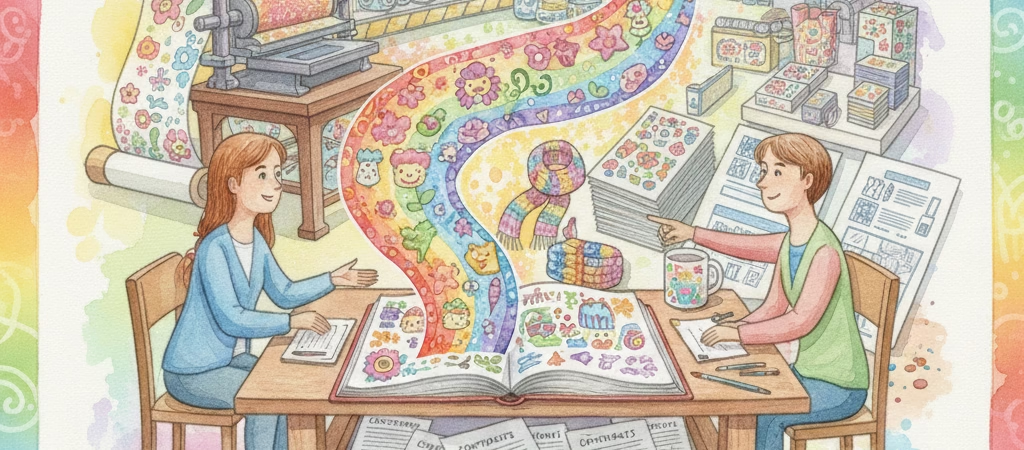
 Licensing is essentially the art‑world version of Airbnb: you still own the house, but you let someone else use it for a while — in exchange for money and the promise they won’t trash the place. Legally speaking, licensing allows an artist or copyright owner to “lease” specific rights to a manufacturer or company for a defined purpose, time period, and geographic region. You keep your copyright or trademark; they get permission to use your work on a product.
Most licensing agreements involve royalties — a percentage of sales — sometimes paired with an advance. According to industry breakdowns, typical art‑licensing royalties range from 3% to 10%, with 5% being common for craft‑related products. Rates vary by product category, distribution channel, and your reputation. As your name becomes more recognizable, your leverage increases. Some contracts even include “escalator clauses” that bump your royalty rate once certain sales milestones are hit — a polite way of saying, “If you help us sell a ton of stuff, we’ll sweeten the deal.”
Why License?
Licensing is one of the most efficient ways to make your artwork work harder than you do. Instead of creating new designs for every opportunity, you can extend a single design across multiple uses: publications, classes, marketing, and licensed products. This is why it’s crucial to retain your non‑publication rights. If you sell “all rights,” a magazine could license your design out from under you — and you’d be stuck watching someone else profit from your own creativity.
Licensing also builds brand exposure. Before you begin, decide whether you want to license under your personal name, a company name, or anonymously. Each path has pros and cons. Licensing under your own name builds brand equity but requires strict quality control. Licensing under a company name gives you flexibility if you ever want to sell the business. Generic licensing (where your art appears under a manufacturer’s brand or even another artist’s line) often pays a lower percentage, but higher volume can make up the difference.
Finally, licensing frees you from the burdens of manufacturing. Yes, manufacturing yields 100% of the profit — but also 100% of the risk, inventory, shipping headaches, and the joy of discovering that 2,000 units of your product arrived misprinted. Licensing shifts that risk to the manufacturer so you can focus on what you do best: designing.
More on Risks
Licensing isn’t risk‑free. One major pitfall is competing with yourself. If you teach people how to paint murals, licensing wallpaper might confuse or alienate your core audience. But licensing bedding, stationery, or fabric? No conflict — just opportunity.
Quality control is another big concern. A poorly made product with your name on it can damage your reputation faster than you can say “I didn’t approve that shade of chartreuse.” Over‑licensing can also dilute your brand; if your art appears everywhere, it may feel less special.
This is where due diligence comes in. Research manufacturers thoroughly. A reputable company should offer clear quality standards (beware vague phrases like “industry‑acceptable quality”) and allow you to approve prototypes before production. As your brand grows, you’ll gain more negotiating power — but even early on, you should expect basic quality protections.
Define Your Brand
Before signing anything, create a brand standards guide. This should include your logo, trademarks, color palette, visual style, and any “absolutely not” categories (for example, if you never want your art on cigarette lighters or political merchandise). A clear brand guide helps manufacturers understand your aesthetic and protects your long‑term brand identity.
To Agent or Not?
Licensing agents are matchmakers for artists and manufacturers. They represent multiple artists, often within specific markets such as home décor, stationery, or textiles. Some require exclusivity across all categories; others only within the markets they handle.
Agents bring industry contacts, negotiation expertise, and presentation polish. They can manage approvals, contracts, bookkeeping, and royalty tracking. In exchange, they typically take around 40% of your royalty income — a number that may feel painful until you realize how much time and access they save you. A good agent can dramatically increase your licensing opportunities while freeing you to focus on creating.
How to Find a Manufacturer
Some manufacturers work directly with artists. Start by examining products you love in stores and noting the manufacturer’s name. Many companies list submission guidelines on their websites. If not, you can contact them (yes, even with an old‑school SASE if needed) to ask whether they accept freelance submissions or require agent representation.
Presentation
If you’re approaching manufacturers without an agent, follow their submission guidelines exactly. Your presentation should be visually polished and include:
- A clear brand overview
- Your licensing strategy
- Your target demographic
- Your brand standards guide
- A press kit
- Sample designs (never originals — send high‑quality prints or photos)
Licensing is a numbers game. You may send dozens of submissions before receiving a single response. Persistence and brand recognition are the keys to success.
Resources for More Information
Licensing Business Handbook by Karen Raugust (EPM Communications, Inc.)
SURTEX Trade Show (http://www.surtex.com/)
Licensing Expo (formerly Licensing Show) (https://www.licensingexpo.com/)
EPM Licensing Letter Sourcebook (EPM Communications)
Additional Verified Resources from Search Results:
Art Licensing Fees and Royalty Rates Explained – Empowered Artists
(https://www.empoweredartists.co/post/art-licensing-fees-and-royalty-rates-explained-what-are-the-art-licensing-fees-and-royalty-rates)
Understanding Art Licensing Royalty Rates – Chris Wilson Studio
(https://chriswilsonstudio.com/art-licensing-royalty-rates/)
How to License Your Artwork – Cobanker
(https://cobanker.com/articles/how-to-license-artwork/)