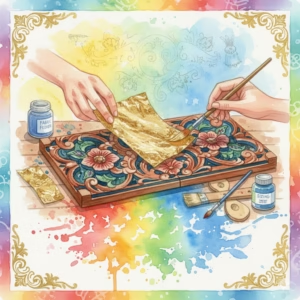
 Gold Leafing has been a part of the decorative arts dating back to Egyptian burial sites. A touch of gold can brighten up any crafting or decor project. Leafing products are not limited to gold; however, virtually all metallic colors are available.
“Gold Leaf”
Because gold is so soft, it can be beaten into very thin sheets. Because real gold is, not surprisingly, extremely expensive, crafters usually use composition leaf. If you read the package, you will find that most “gold leaf” products are labeled as something like “genuine gold color imitation metal leaf.”
Metal leaf is an alloy of gold-colored base metals; usually copper, tin and zinc. To make a product that is easier to use, metal leaf is usually available in larger and thicker sheets than true gold leaf.
Leafing sheets usually come in a “book” with tissue between each sheet. Use a bit of powder or cornstarch on your hands so that the leaf will not stick to you, and place a sheet of wax paper over the leaf. The warmth of your hand will make the leafing stick to the wax paper so that you can transfer it to your surface.
“Size” is an old English word that means adhesive. Traditionally, gold leaf is applied over a colored paint or clay texture, sometimes called a “Bole”. Once the background is dry, apply adhesive over the surface to be leafed. Let the adhesive set up until it is tacky – usually about 30 minutes – then apply the leaf over the adhesive. Be sure to read the instructions on the adhesive you will use, as some require multiple coats and a longer drying time.
Rub the leaf into place with your hand or a soft cloth then lift away the wax paper. Dust away excess leaf with a soft cloth or paper towel. Metal leaf will tarnish unless it is varnished. It can also be antiqued to give it an aged patina. The leaf shown here is by Houston Art, Inc.
Foil Leafing
Foil products, such as Delta Technical Coating’s Renaissance Foil, are a less expensive alternative for gilding. The foil is applied over an adhesive made for the product. Because this is foil, and not metal, it has a much brassier appearance than traditional leaf. The line includes a variety of antiques to help you customize the final color of the metal.
Staedtler makes a “Hot Foil Pen” that allows you to write over foil to apply it directly to your surface for embellishment. The pen is a bit unwieldy, but it is a fast way to apply foil to your projects. The pen requires two AA batteries that heat the tip to adhere the foil.
Rub-On Gold Finishes
These are gold colored pigments mixed into a wax medium. Like gold leafing, these products will tarnish unless varnished because they include real metals. Products in these categories include Plaid’s “Rub n’ Buff” and Treasure Gold”, and “Goldfinger” by Daler-Rowney. Rub-on finishes are excellent for use over textured surfaces – such as a molded frame.
Gilding Inks
Borrowing from the world of rubber-stampers opens a world of new products to the painter. Two of my favorites include Posh Impressions Inkabilities Precious Metals. These are acid free inks that can be applied directly from the bottle, or by sponge or brush, to the surface. They dry on virtually any surface.
If you have a heating tool, you can use embossing inks and powders for a textured gold finish. The product shown in the example is Ranger Ink’s Color It Gilding Pad in Bronze Patina. Embossing inks are very slow to dry, and should be set with a clear embossing powder using a heat tool or gun. This is a fun way to add a more burnished effect to your designs but you can only do it on surfaces that can withstand the heat necessary to set the embossing powder.
Powdered Gold
Extremely fine metal powders – usually made from Bronze or Mica – create luxurious gold finishes. Imitation products, such as Pearl Ex Pigments are another option. You need to be very careful when using powders. Bronze powder is toxic, but Mica and Pearl Ex products are “non-toxic”. Anytime you are using a pigment in a powdered form you should wear a face mask and keep the area well ventilated.
These products can be applied to your surface in several ways. You can mix them with an adhesive, a gel medium, or a wax. You can also add them to your paint directly to add luster.
Gold Paint
Most manufacturers make metallic paints. Special “leafing” paints, such as Plaid’s Liquid Leaf, and Jacquard’s Lumiere provide an even greater luster. Be sure to read the instructions for the product before using them. Some require ventilation and suggest using a mask because of the toxic nature of metal.
Want to learn more?
For more information about gilding, visit the Society of Gilders at http://www.societyofgilders.org/