
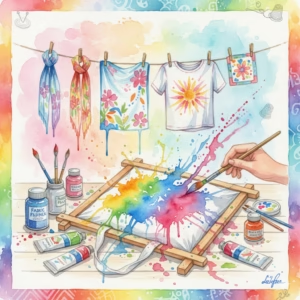
 Over the past few years Home Décor has become increasingly popular among crafters and artists. During this time we’ve seen crafts such as candle and soap making make a comeback, along with candle and soap painting, glass painting, and more. Along with these wonderful surfaces, fabric is making a comeback as a painting surface as artists work with tablecloths, curtains, bed linens, and other practical home items. There are a bevy of new products on the market to help. In this article I will introduce you to some of the new products, and remind you of some of the “old faithful” products that are better than ever.
The Basics
If you are new to the world of fabric painting, there are a few things you should know. You can use either special fabric paint, or use a fabric or textile medium made for the acrylic brand you use, to paint directly on fabric. All paints come with their own instructions, but generally you will work on pre-washed fabric. Do not use fabric softener in the wash or dryer sheets in the dryer before painting as this can affect the adhesion of the paint to the fabric.
For the best result, you should use brushes made specifically for painting on fabric. As most fabric has a dense weave, stiffer brushes are used to rub the paints into the weave. However, lighter weigh fabrics, such as silk, may require very soft brushes so that the fabric is not damaged.
Cover your worktable with a waterproof drop cloth. You may wish to tape your fabric down so that paint that seeps through the fabric does not spread if the fabric were to move. If you have a double-sided piece (such as a shirt) place a wax paper covered board in between the front and back to prevent the paint from bleeding through to the other side.
Most fabric paints will need to be heat-set to become permanent. Follow the directions on the product you choose for the best result.
Paints
Most major manufacturers have a full line of fabric painting products. DecoArt produces So Softâ Fabric paints in Dimensional, Glitter, Metallics, Neons, Shimmering Pearls, as well as a basic Fabric Acrylic. DecoArt, Inc. also makes a Color Resist Medium in a liner bottle that allows you to draw a pattern and make a “mask” where you do not paint on the project. Once your design is painted you can remove the Resist with soap and water and the original color of the fabric will show through. The So-Soft Transparent Medium that makes the Fabric Paints sheer is excellent for glazing in color or allowing the fabric color to show through your design.
Delta Technical Coating’s line of fabric paint includes Brush-On Fabric Dye Colorsä, Starlight Shimmering Fabric Colorsä, and Starlite Glittersä. Delta also makes Fabric Colors and a Fabric Gel to get a “watercolor” look on fabric. Delta Color Resistä can be used to trace your pattern as a mask.
Plaid Enterprises, Inc. produces Dimensional Fabric Paint in Shiny, Metallics, Glitters, Neons, Sparkles, and Pearls for its Fashion line. Plaid also has a new product called ‘Glo-Away” for use on fabric and other surfaces. As the title suggests, this product washes out of fabric but until then it produces a “glow in the dark” effect when activated by exposure to light.
Pebeo, a company you may be familiar with for their excellent glass paints, also makes Fabric Paint. Pebeo Line is a dimensional paint available in opaque, gloss, pearlescent, and fluorescent paints applied directly from the tube. The tube has a nozzle that makes lining and writing easy. Pebeo Setacolor is a full line of transparent and fluorescent paints that can be mixed together or used on their own. The Translucent paints are light sensitive and allow you to do sun printing by painting the surface, placing cut out designs over the painted surface, and then exposing it to the sun.
Mediums
Many artists find that a more economical way to work with fabric is to use a Fabric or Textile Medium to turn their regular acrylic paint into a permanent fabric medium. It is important to use the Fabric Medium made for the acrylic paint you choose. For Example, DecoArt Fabric Painting Medium transforms Americana Acrylics into fabric paint. Delta also makes a Textile Medium to create Fabric Paint directly from Ceramcoat Acrylic colors and Plaid’s Folk Artâ Textile Medium may be used with FolkArt paint to create permanent, washable designs on fabric. Jo Sonja makes both a Textile Medium and a Magic Mix (which can be used as a substitute for water) product for use on Fabric.
Masks
Using masks can help you get greater dimension to your design. As fabric paint and dyes are thin and the nature of fabric is to absorb, masks help you control the flow of paint to specific areas. As mentioned above, DecoArt and Delta make Resist products for this purpose. Silk painters get the “stained glass” effect often associated with silk designs by using resists.
Another product that may be used for masking is Therm O Web’s Masking Magicä. Masking Magic is a thin film with an adhesive backing. To use it, simply trace your design on the clear side of the film using a permanent marker. Cut out the design (or individual elements) and then peel the backing off. Apply the cut out over the top of the design (or a portion of the design) and paint around it. When finished, simply pull the mask off.
Transferring a Design
There are a variety of ways to transfer a design to fabric. Using a stencil (Delta makes a line of Fabric Stencils that have a reusable adhesive back just for this purpose) is one way. A new way to transfer designs to fabric is by using the new Fabric BLOpensâ with a stencil. You can create your own stencil from a design with cardstock or cardboard, or you can use one of the many simple designs available with the BLOpen kits. If you do a lot of fabric painting you may wish to purchase a foot pump for the BLOpens. The trick to getting an even flow from the pens ns is to maintain a strong but steady stream of air through the pen. Light air pressure will result in a spattered effect.
You can also use Houston Art’s Super Chacopaperâ on fabric for a design that can be rinsed away with water. Chacopaper is available in blue and white. If available you can use an Iron-On Transfer of the design, or make your own with special paper for your Ink-Jet style printer. Transfer pencils are also available to iron on a design.
White chalk can be traced over the back of your pattern. Using a strait edge (such as a ruler or credit card) rub over the design and the chalk will be transferred to your surface. This works well with dark colored fabrics where traditional transfer methods may not show up. You can also transfer designs by tracing your design directly onto Tulle (a mesh like fabric often used in veils.) After transferring your design, place the tulle over your fabric and using a permanent pen trace over the design. The Tulle will block part of the design giving you a light dotted outline on your fabric that is easy to cover.
Fabric Stamping
Another easy way to apply a design to fabric is using Rubber Stamps. Rubber Stampede, Delta Technical Coatings Paintability, and Plaid Enterprises Posh Impressions and Fun to Paint all have products specifically for use with paint on fabric. Use a cosmetic sponge to apply an even coat of paint to the stamp and then apply it directly to your surface. Plaid’s Dee’s Duets and Fashion Double-Ups both have secondary stamps used to apply detail. More experienced painters can simply add their own details. To make your own stamps, trace a design on a Miracle Sponge (or even a potato sliced in half vertically) and cut or carve the design. Apply paint for your own stamp design.
Tips
-
-
White paint over sheer fabric creates an “embossed” look.
-
-
-
When choosing lightweight fabrics make sure that they are capable of being heat-set. Some fabrics will melt when exposed to heat.
-
-
-
Keep in mind that acrylic paint will take longer to dry on fabric.
-
-
-
Make sure fabric is kept flat while drying as the “plastic” component in acrylic paint can cause fabric to appear “wavy”.
-
-
-
When using stamps on fabric, do not rock or apply too much pressure or you will get an overstamp from the side of the stamp.
-
-
-
In addition to the Resists made by Delta and DecoArt, you can use Gutta (made from Latex) or Wax to create your own resists.
-
-
-
An excellent source for fabric and fabric paints and Dyes is the Dharma Trading Co. Get their catalog at 800-542-5227 or visit their website at http://www.dharmatrading.com
-