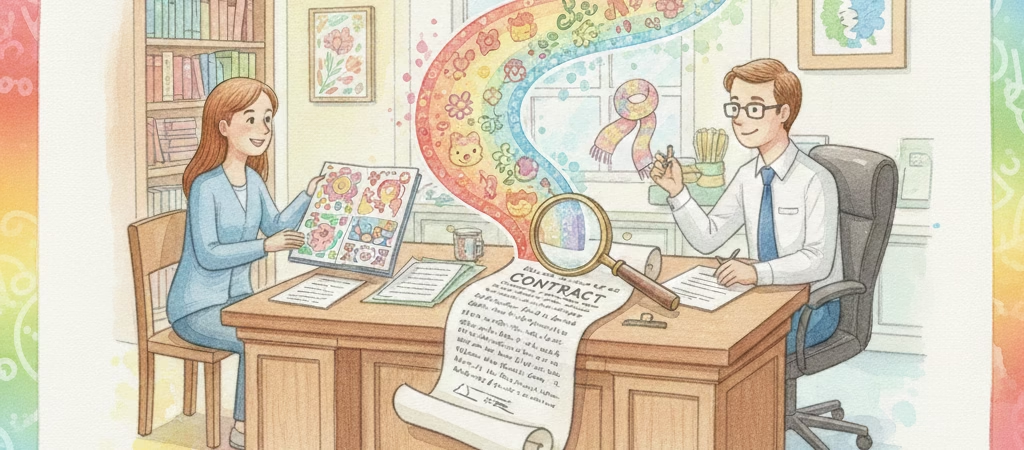
 As a “retired” attorney — meaning my law license is now sitting on a metaphorical beach somewhere sipping a margarita — I am endlessly amazed at how many designers admit they sign whatever contract a publication sends them without reading it. Not skimming. Not glancing. Not even holding it up to the light like a spy decoding secret ink. Just signing.
This usually comes from fear: fear of rejection, fear of rocking the boat, fear that if you ask a question, an editor will hiss, “How dare you,” and banish you to the Island of Difficult Contributors. Spoiler: that island does not exist. Editors are too busy to run a penal colony.
Because I no longer practice law, this is not legal advice — just the perspective of someone who has been both an attorney and an artist long enough to know where the landmines are buried. Think of this as your confidence‑building warm‑up before the real negotiations begin.
The Myth of the “Standard Contract”
Lawyers love to joke about the “standard contract.” It’s right up there with unicorns, calorie‑free cheesecake, and people who actually read Terms of Service. There is no such thing. When someone says, “Oh, it’s just our standard contract,” what they often mean is, “This is the version that benefits us the most, but we’re hoping you won’t notice.”
In creative industries, both parties want to make money. And if they’re smart, they want you to make money too — because profitable artists keep producing work, and profitable companies keep publishing it. A good contract is not a battle; it’s a business plan for a long‑term relationship.
Fortune Favors the Bold
When you’re new, you have less bargaining power. That’s normal. But many designers assume that once they’ve built a relationship with a company, that company will automatically “take care of them.” Unfortunately, editors and manufacturers have budgets, and if they can pay less… they will. Not because they’re villains — because they’re running a business.
So you must ask. The worst they can say is “no.” NOTHING CHANGES if they say no. If they offer $150 and you ask for $175 and they decline, you still have the original $150. “No” does not vaporize your offer. It simply means “nice try.”
What Is Negotiable?
Everything.
Truly; everything.
Money, rights, deadlines, kill fees, exclusivity, payment schedule, number of revisions, how your name appears, whether they send you a complimentary copy, whether they spell your name correctly — all of it.
Negotiation is not confrontation. It’s collaboration. You’re saying, “Here’s what I bring to the table,” not “Hand over your wallet.” If self‑promotion makes you break out in hives, ask a friend to help you list your strengths and accomplishments. Keep your résumé updated. Confidence is easier when you have receipts.
If a manufacturer tells you the contract is non-negotiable, your attorney will still go back to them with changes. If they stick with no changes, then your attorney needs to tell you whether the contract is fair as is. Just keep in mind that if they are that inflexible with the contract, chances are they will be similarly inflexible with other issues. That is a point to seriously consider.
Communication
One of the biggest mistakes designers make is failing to negotiate before the contract arrives. Keep individual files on each publication or manufacturer with their policies. And remember: policies are not commandments carved in stone. They are editable documents written by humans who can be persuaded by logic, value, or the promise of a mutually beneficial outcome.
Sometimes the best negotiation strategy is simply walking away. If a company wants rights they’re not willing to pay for, or if their contract is unreasonable, you are allowed to say, “No, thank you.” Knowing your value is the first step toward protecting it.
Before negotiating, brainstorm potential issues and solutions. If an editor wants “all rights,” counter with “all publication rights for X months.” If they refuse, ask why. Their answer may reveal a compromise. For example, if they want all rights because they plan to include your project in a future compilation, you can offer publication rights with an additional fee for any subsequent use.
Publication Rights (a.k.a. The Part Where Many Artists Accidentally Give Away Their Souls)
Understanding rights is essential. If you don’t understand a contract, consult an attorney in your jurisdiction. For now, here’s a friendly overview:
All Rights
This means you give up everything. Forever. They can publish, republish, license, sell, adapt, embroider, tattoo, or turn your work into a novelty keychain — and you get nothing beyond the initial payment. Unless you’re being compensated for every possible use across your entire lifetime, selling all rights is rarely wise.
First Rights / First North American Rights / First Serial Rights
They get to publish it first. After the exclusivity period ends (which can be months or years), you can resell or reuse the work. Longer exclusivity = higher compensation.
Second or Reprint Rights
For work that has already been published. These usually pay less but are great for maximizing income from existing work.
First Right of Refusal
This gives the buyer the first chance to purchase your next similar work. Define “similar” very carefully. “Craft book” is vague. “Craft book of 120+ pages featuring linen designs” is not.
Ownership Rights
Beware the phrase “work for hire.” It means the company owns everything you create under that agreement. If you see it, question it. Contracts should explicitly state that you retain copyright unless you intentionally choose otherwise.
Other Contract Provisions
Every contract should include:
- Date
- Names and addresses of all parties
- Signatures of both parties
• A detailed description of the work - A clear description of rights granted
- The type of merchandise or publication
- Copyright / Trademark credit and notice
- Duration of the contract
- Kill fee (for publications)
- Deadlines
There are dozens of additional clauses depending on the industry: arbitration, indemnification, distribution rights, insurance, reversion clauses, and more. Book contracts differ from licensing contracts, which differ from magazine contracts. The more you learn the terminology, the more empowered you become.
For deeper reading, the following resources from your search results offer excellent breakdowns of contract terms, negotiation strategies, and red flags:
- Entertainment Contract Essentials – Art and Media Law
(https://artandmedialaw.com/entertainment-contract-essentials/) - Understanding Contract Law Basics for Creators – Laws Learned
(https://lawslearned.com/contract-law-basics-for-creators/) - How to Negotiate a Fair Publishing Deal – BubbleCow
(https://bubblecow.com/blog/book-publishing/understanding-publishing-contracts/how-to-negotiate-a-fair-publishing-deal/)
Choosing the Right Attorney
Find an intellectual property attorney who specializes in your type of work. A lawyer who negotiates athlete endorsement deals is not the right person to review your craft‑book contract. Look for someone with experience in publishing, licensing, or visual arts — whatever aligns with your project.
And remember: a contract is not a test you can fail. It’s a conversation. You are not “difficult” for asking questions. You are a professional protecting your livelihood.
Fortune favors the bold — and so do good contracts.