
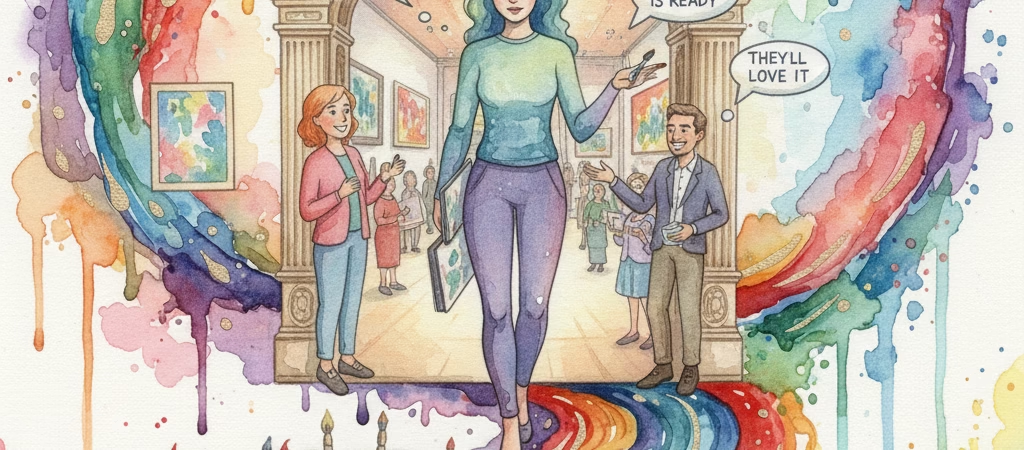
 Walking into a gallery, sending that first email, or introducing yourself to a curator can feel daunting. You may worry about being rejected, sounding inexperienced, or not “measuring up” to the other artists.
The truth? Feeling intimidated is normal—but it doesn’t have to stop you. Approaching galleries is a skill, and like any skill, it can be learned and practiced.
Here’s how to do it confidently and authentically.
1. Remember Galleries Are Looking for Artists Too
Curators want to discover compelling work and talented artists. You are not bothering them; you are offering something valuable: your unique voice, your skill, and your perspective.
Think of your approach as a mutual opportunity rather than a request.
2. Do Your Homework
Familiarity reduces fear. Research:
- The gallery’s aesthetic and represented artists
- Current and past exhibitions
- Submission procedures and deadlines
When you understand the gallery’s needs, you can approach with confidence rather than uncertainty.
3. Start With an Email or Message, Not a Cold Call
A well-written email can be less intimidating than in-person introductions. Keep it short, polite, and professional:
- Introduce yourself briefly
- Include a link to your portfolio
- Mention why you’re reaching out or what excites you about their space
- Respect their time and thank them
Curators receive many inquiries, but clear, concise, and respectful communication stands out.
4. Practice In-Person Introductions
If visiting a gallery, practice your introduction ahead of time:
- “Hi, I’m [Your Name]. I’m an artist working in [medium/style]. I admire your exhibitions and wanted to introduce myself.”
Short, genuine, and professional—no need for long explanations or sales pitches.
5. Bring Your Focus to the Work, Not Yourself
It’s easier to stay calm if the spotlight is on your work:
- Talk about your process, materials, or themes
- Share what makes this piece meaningful
- Keep the conversation centered on art rather than self-judgment
Your enthusiasm for your work is contagious; fear fades when your passion is visible.
6. Normalize Rejection
Even established artists face rejection. Galleries have limited space, timing constraints, and subjective tastes. Rejection is not a judgment of your skill or value—it’s simply part of the process.
The key is to keep submitting, building relationships, and refining your presentation.
7. Take Small, Comfortable Steps
You don’t have to dive into a major gallery immediately. Start with:
- Local or co-op galleries
- Pop-up shows
- Artist-run spaces
- Friendly networking events
Every positive interaction builds confidence for bigger opportunities.
Final Thought: Approach With Curiosity
Approaching galleries is less about “proving” yourself and more about exploring possibilities. When you shift the focus from fear to curiosity—learning about spaces, showing your work, and connecting with professionals—the process becomes exciting rather than intimidating.