
 UFOs and Other Space‑Devourers
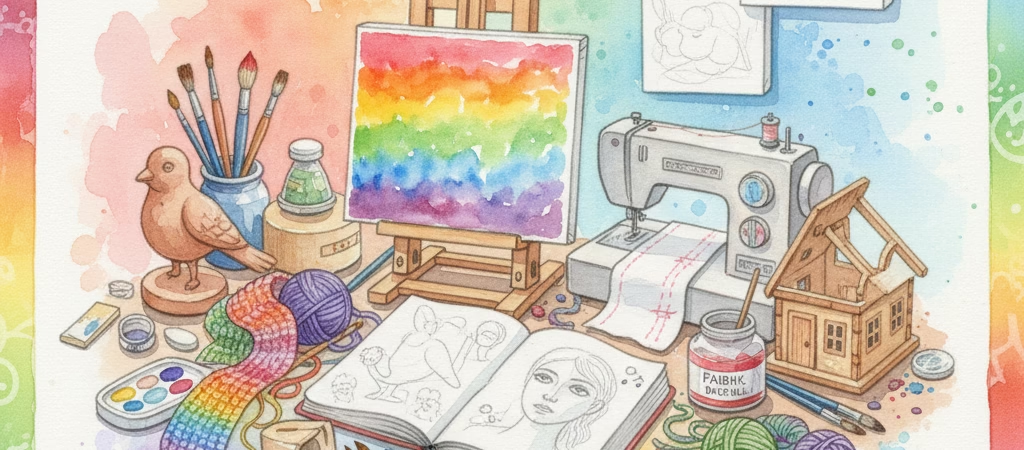
Creative people thrive on possibility. We keep materials on hand for snow days, sick days, sudden inspiration, or the irresistible urge to try something new. But there’s a tipping point where “being prepared” becomes “being buried.” Art supplies multiply quietly until one day you realize the very materials meant to support your creativity are now smothering it. When every surface is covered and every corner hides a half‑started idea, it becomes harder—not easier—to make anything at all.
This is how UFOs (UnFinished Objects) take over. One project becomes two, then five, then a small colony of guilt‑inducing reminders that you “should” be doing more. And that guilt isn’t imaginary. A 2026 Yale study published in the Journal of Experimental Psychology: General found that the human brain is deeply unsettled by unfinished tasks. Yale psychologist Brian Scholl explains, “The brain just doesn’t like dangling threads.” The study, summarized by Yale News (https://news.yale.edu/2026/01/09/why-leaving-things-unfinished-messes-your-mind), showed that unfinished tasks are prioritized in visual memory, making them more mentally intrusive and harder to ignore.
Co‑author Joan Ongchoco notes that “unfinishedness has been found to decrease work satisfaction, impair sleep, and fuel ruminative thinking patterns.” This is echoed in the Medical Xpress report on the same study (https://medicalxpress.com/news/2026-01-unfinished-messes-mind.pdf). In other words, your pile of half‑done projects isn’t just clutter—it’s a psychological irritant.
The guilt hits especially hard because creative work is tied to identity. When a project stalls, it’s easy to interpret it as a lack of discipline or passion. But creativity is cyclical, not linear. As Elizabeth Gilbert writes in her book Big Magic, “You can measure your worth by your dedication to your path, not by your successes or failures.” Not every idea is meant to be completed. Not every spark becomes a flame. A pile of UFOs isn’t evidence of failure—it’s evidence of a mind that generates more ideas than any one person could ever execute. It’s a testament to imagination, not inadequacy.
Get Rid of It
If a project clearly isn’t going to happen, release it. Let the materials go to someone who will use them—schools, community centers, women’s groups, senior centers, Buy Nothing groups, or local art teachers. Passing supplies along isn’t wasteful; it’s generous. It frees your space and gives someone else a chance to create.
Sometimes a project becomes a UFO simply because it’s been buried. If you rediscover one and it still sparks something in you, move it into your active art area where you can see it. If it still doesn’t call to you after a week or two, let it go. Your creative energy deserves better than indefinite limbo.
And beware the siren song of specialty gadgets. The art world is full of tools that promise to make you more efficient, more skilled, more something. But just like the single‑use kitchen tools we all regret buying, many art gadgets end up unused. Start with the essentials. Add tools only when your practice genuinely demands them. Beginning beaders need only beads, thread, needles, and scissors. Pliers, looms, and specialty tools can come later—if the interest sticks.
Are You Collecting Art Tools or Creating Art?
There’s a difference between being an artist and being an art‑supply collector. Shopping for materials feels productive. It scratches the same itch as planning, dreaming, and imagining. But collecting is not creating. As Austin Kleon writes in Keep Going, “The tools matter, but they’re not magic.” The magic happens when you actually sit down and make something.
Take an honest look at which projects you truly enjoy. It may take time—and yes, you’ll end up with supplies you don’t use. That’s normal. Purge periodically. Pass along the projects that didn’t take flight so someone else can soar with them.
Storage Strategies That Actually Work
Some materials are naturally self‑contained and fit neatly into a single box or case. Portable kits are especially helpful because you can keep them where you’re most likely to use them and take them with you when traveling.
For paints, a tall wire shelving rack on wheels can be a lifesaver. It keeps everything visible, accessible, and mobile. Rolling carts with drawers are great for frequently used tools, though sturdiness matters—cheap carts often jam once they’re full.
Plastic bins work well for materials sensitive to light or moisture. Always consider the enemies of art supplies: sunlight, humidity, dust, and critters. Hardware stores often carry excellent storage options originally designed for nuts, bolts, and tools—usually cheaper and sturdier than craft‑store equivalents.
Pegboards are ideal for power tools and sharp tools, especially if you need to keep them out of children’s reach. Zip‑lock bags can protect paints from drying out or leaking. Clean brushes thoroughly before storing them, and keep them upright so the bristles stay intact.
Repurpose what you already own. Tupperware, mason jars, spice racks, and silverware trays can become excellent organizers. A sturdy folding table can give you extra workspace when you need to spread out, and adjustable‑height tables are wonderful if you want to alternate between sitting and standing.
Most importantly, keep your materials close to where you actually create. If your kitchen table is your studio, use a mobile cart or bin that can be rolled out quickly. The less time you spend gathering supplies, the more time you spend making art.
Don’t Stress
As your creative practice evolves, your storage systems will evolve with it. Creative people are naturally adaptable and comfortable with open‑ended processes. A certain amount of incompletion is normal. But when UFOs pile up, stress and guilt follow. The Yale research confirms that unfinished tasks weigh heavily on the mind, increasing rumination and reducing satisfaction. Some creatives struggle with decision‑making or avoid tasks that feel unpleasant, which makes UFOs even more likely to accumulate.
The solution is simple but powerful: have a plan. Decide how often you’ll review your projects. Decide what criteria determine whether something stays or goes. And then stick to it. A clear system protects your space, your energy, and your creativity.
Your art deserves room to breathe—and so do you.
Sources: Yale News: Why leaving things unfinished messes with your mind (https://news.yale.edu/2026/01/09/why-leaving-things-unfinished-messes-your-mind) Medical Xpress: Why leaving things unfinished messes with your mind (https://medicalxpress.com/news/2026-01-unfinished-messes-mind.pdf) MSN Health & Wellness: Why leaving things unfinished messes with your mind (https://www.msn.com/en-us/health/wellness/why-leaving-things-unfinished-messes-with-your-mind/ar-AA1U3PFS)