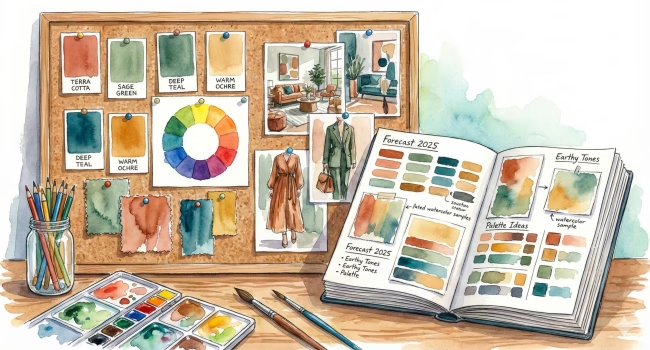
Knowing what colors will be “in” can be a tremendous benefit; especially if you sell your work or are creating a piece for a trendy friend or family member. Even if you just want your clothes to be on trend, or are choosing a paint color, knowing about color trends is a benefit. Unfortunately, fashionable colors change with far greater speed than they did in year’s past, as consumer demand for instant gratification and the “newest” items have forced industry to use color as a way to create diversity in the marketplace.
Generally, colors in fashion (clothing) change much quicker than home décor colors. (Craft painting is considered part of home décor for the purpose of color forecasting, as most items will be displayed in homes.) Typically, colors in fashion (clothing fabric) will remain popular for about two years, while home décor palettes hold their popularity three to five years – based on the frequency with which people replace major house items.
COLOR FORECASTING
In 1962, an international not-for-profit organization was formed with 1,700 participants who forecast color trends one to three years in advance. That organization, the Color Marketing Group, predicts color trends for all industries, manufactured products, and services including interior/exterior home, cars, architectural, graphics, fashion, office, healthcare, retail, and entertainment.
The Color Marketing Group (CMG) and the Color Association of the United States (CAUS) are among several color forecast groups that manufacturers use to help them track and predict trends for products brought to market. Manufacturers such as Pantone and Dupont have their own color recommendation process for their specific industries. In addition, there are specialty companies, such as The Color Factory, that will provide specific research to manufacturers on upcoming trends. A simple online search for “color forecasting” will provide you with a large range of information.
CMG’s 2026+ Key Colors are now officially announced as part of the World Color Forecast™, reflecting global cultural, environmental, and emotional shifts. The forecast identifies one Main Key Color and two Supporting Key Colors for each of four regions: Asia Pacific, Europe, Latin America, and North America.
- Asia Pacific – Cherish: A soft, low-chroma peachy orange with a gentle pink warmth, symbolizing emotional bonds, cherished traditions, and the comfort of personal connections in a fast-paced world.
- Europe – Protopia: A deep, low-chroma red-cast purple representing sustainable transformation, introspection, and the courage to confront systemic challenges with realistic hope.
- Latin America – Mistério Complexo: A low-chroma green-cast blue embodying the complexity of the human mind, balancing boldness with caution, and reflecting humanity’s need to navigate progress and preservation.
- North America – Bio-Graphing: A pale blue with a natural green cast, symbolizing the fusion of biology, AI, and nature through regenerative design and personal data reset for a sustainable future.
These colors are derived from a global forecasting process involving regional steering committees and member input, culminating in the 2026+ World Color Forecast™. The full forecast includes detailed Color Stories, palettes, and trends for design, fashion, and consumer products. For more insights, visit ColorMarketing.org.
PERSONAL TASTE
In our consumer driven society, personal “taste” is often dictated by social pressure and exposure to new ideas. Consumers are bombarded with images daily from television, magazines, retail stores, and advertising. From a marketing point of view, popular culture loves change, and over the last several decades, color has increasingly become more important in consumer choices.
You may notice, for example, that you loved olive green in the 1970’s but hated it by the time the 1980’s came around. Mauve and Blue may have been your favorites in the 1980’s but that changed by the late 1990’s. Much of this is due to the products that are available on the market. If you begin to see sage green everywhere, eventually the color may grow on you because you see it in many contexts.
Such color forecasting is based on the idea that public taste can be anticipated – either in reaction to a current event or as a kind of natural progression. The popularity of certain colors can certainly make sense in the context of history. Consider the strength of red and blue in post 9/11 America.
HOW DO THEY KNOW?
Despite the fact that groups such as CMG are represented by an international coalition of members, all bringing data from their own industries, and that the groups look to current political, social, and economic indicators, color forecasting is not a sure thing. At best, forecasting is an educated guess.
Before the final choice is made, various colors are shortlisted by the Steering Committee. The shortlist is based on various parameters, which may include one or more of the following:
- The number of times a color was submitted by participants during a ChromaZone®. Sometimes, it’s not the exact color that is submitted various times, but variations of it.
- The color was selected as a ChromaZone Story Key Color or ChromaZone Key Color.
- The most predominant color family in the Forecast. This is based on the number of colors within a color family.
- The most unexpected color in the Forecast, but closely related and representative of the general mood of the Color Stories.
Shortlisted colors are discussed one by one with an explanation of what they signify and symbolize, and why they will be important to represent the forecast. Following discussions, the committee votes on the colors until one color ends up with the most votes.
Groups such as CMG that have a lot of power to influence color trends because of their membership creating a sort of “self-fulfilling prophesy”. This is true in part because their members return to their own industry with the group’s findings and implement them.
COLOR 2026
CMG (www.colormarketing.org) predictions are above. But, they are not alone in forecasting colors. So, it is smart to look at the most prominent forecasters and see where they overlap.
According to WGSN (World Global Style Network), the 2026 consumer color landscape reflects a shift toward authenticity, wellness, and grounded aesthetics, driven by a desire for emotional balance and connection in a fast-paced world. Key themes include rich browns, earthy neutrals, and moody jewel tones, with a strong emphasis on nature-inspired, restorative hues.
Top 2026 Consumer Colors and Trends
- Transformative Teal (WGSN & Coloro): The 2026 Colour of the Year, this fluid blend of dark blue and aqua green symbolizes change, ecological responsibility, and resilience. It’s a fresh, calming choice for interiors, fashion, and beauty.
- Silhouette (Benjamin Moore): A sophisticated espresso with charcoal undertones, inspired by tailored suiting. Positioned as a timeless, versatile neutral that counters “trend fatigue.”
- Hidden Gem (Behr): A smoky jade blue-green that feels intentional yet soothing—ideal as a “new neutral” for kitchens, bathrooms, or full-room drenching.
- Warm Mahogany (Glidden): A bold yet enduring red-brown that balances drama and timelessness. Celebrated as an “anti-trend” choice for cozy, personal spaces.
- Melodious Ivory (Dutch Boy Paints): A soft, creamy beige that supports simplicity, intentionality, and the “slow living” movement across all design styles.
- Matte Coffee Bean (Krylon): A dark, earthy brown inspired by clay, wood, and stone—celebrating craftsmanship and the “grit and grind” ethos of DIY and restoration.
- Cocoa Powder (WGSN): A red-toned brown evoking nostalgia, nature, and the handmade—perfect for grounding interiors and sustainable design.
- Patina Blue (Etsy): A blue-green inspired by aged copper, capturing the cultural appetite for “lived-in” pieces and vintage authenticity.
- Divine Damson (Graham & Brown): A deep burgundy plum that transcends trends, offering luxury and tranquility in bedrooms and statement spaces.
- Fresh Purple (WGSN): A culturally emotive, AI-linked hue representing creativity, mystery, and the “phygital” world—ideal for youth-driven design.
Key Cultural Drivers
- Anti-trend thinking: Consumers are favoring personal identity over fleeting trends.
- Biophilic & craft-driven design: Natural materials, handmade elements, and sustainability are central.
- Wellness through color: Hues are selected for their emotional impact—calm, restoration, and emotional grounding.
- “Tool belt generation” influence: The rise of hands-on trades and practical aesthetics is shaping color choices.
These colors collectively signal a cultural pivot toward meaningful, enduring design—where color is not just decorative, but a tool for emotional and environmental well-being.
Pantone Predictions (www.pantone.com)
Pantone has officially announced Cloud Dancer (PANTONE 11-4201) as its Color of the Year for 2026—a soft, airy off-white described as “billowy” and “balanced.” The color is positioned as a symbol of calm, clarity, and mental release from the overwhelming noise of modern life. The Pantone Color Institute stated it offers a “conscious statement of simplification” and enhances focus by reducing visual distraction.
However, this choice has sparked debate, with many industry experts and forecasters predicting a different direction. WGSN and Coloro have both named Transformative Teal as the leading contender—a vibrant, aquatic blue-green that blends serenity with a forward-looking energy. This shade reflects values of regeneration, sustainability, and emotional balance.
Other prominent predictions include:
- Behr’s Hidden Gem (a smoky jade)
- Valspar’s Warm Eucalyptus (a muted, earthy green)
- Sherwin-Williams’ Universal Khaki (a warm, neutral green)
- Emerald Green and Olive Green as strong contenders in fashion and branding
While Pantone’s official choice leans toward white, the broader market and design community are overwhelmingly favoring green and teal tones as the defining colors of 2026, driven by a collective desire for nature connection, renewal, and emotional equilibrium.
CLOSING THOUGHTS
At the end of the day, You know more about what colors appeal to you than any outside source. These resources are of most benefit to creators, but they can also be helpful for choosing gifts,