
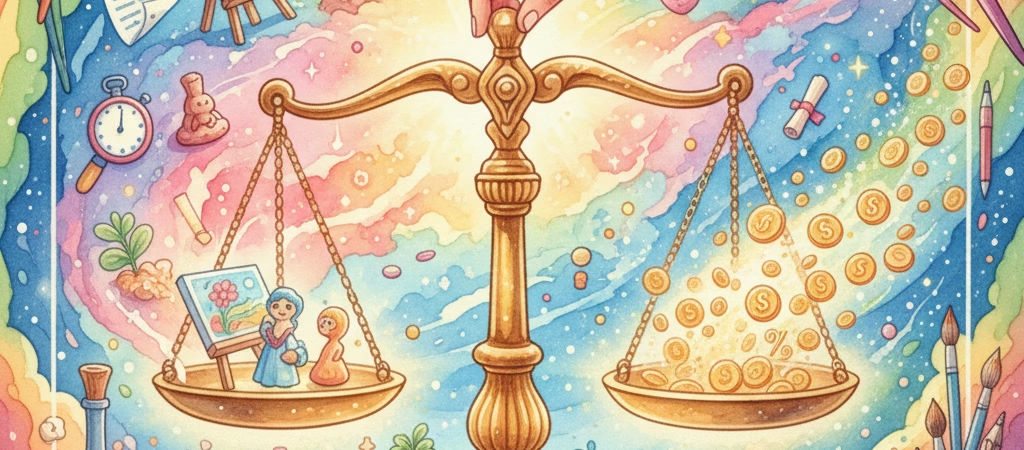
 Pricing creative work is one of the hardest parts of being an artist, writer, or independent creator. Unlike traditional jobs, creative work doesn’t come with a clear hourly wage, a standardized salary, or a neat formula that tells you what your work is “worth.”
And because creativity is personal, pricing it can feel emotional, vulnerable, and deeply uncomfortable.
This guide is here to help you approach pricing with clarity, confidence, and sustainability—without undercutting your value or burning yourself out.
Why Pricing Creative Work Feels So Difficult
Creative work sits at the intersection of passion and labor. You’re not just selling time—you’re selling:
- Skill developed over years
- Creative intuition
- Emotional energy
- Intellectual property
- Experience and problem-solving
Because creativity often starts as something we love, many creators struggle with the idea that it deserves real compensation. But passion does not cancel professionalism.
Step 1: Understand What You’re Really Selling
When you price creative work, you are not just pricing the final product. You are pricing:
- Time spent creating
- Time spent revising and communicating
- Tools, materials, and software
- Education and experience
- Creative decision-making
- The ability to deliver consistently
Your client or customer is paying for the result of all of that—not just the visible output.
Step 2: Decide on a Pricing Structure
There is no single “correct” way to price creative work, but these are the most common models:
Hourly Pricing
Useful for projects with unclear scope or ongoing work.
Pros: Transparent, flexible
Cons: Caps income and penalizes efficiency
Project-Based Pricing
Best for defined deliverables like illustrations, book covers, or writing projects.
Pros: Predictable, scalable
Cons: Requires clear boundaries and contracts
Value-Based Pricing
Prices work based on the value it provides to the client rather than time spent.
Pros: Highest earning potential
Cons: Requires confidence and experience
Many creators use a hybrid approach, depending on the project.
Step 3: Calculate Your Baseline Rate
To avoid underpricing, you need a realistic baseline.
Ask yourself:
- How much do I need to earn per year?
- How many hours per week can I realistically work?
- What are my business expenses?
From there, calculate a minimum hourly or project rate that allows you to sustain your creative life—not just survive it. If a price doesn’t support your needs, it’s not a fair price—no matter how exciting the project sounds.
Step 4: Factor in Experience and Expertise
Beginners often price too low because they focus on what they don’t know yet. Experienced creators sometimes underprice because they forget how much they’ve learned.
Your rate should reflect:
- Years of practice
- Specialized knowledge
- Speed and efficiency
- Artistic voice and style
Clients are not just paying for your hands—they’re paying for your judgment.
Step 5: Stop Pricing Based on Emotion
Pricing based on guilt, fear, or comparison leads to burnout.
Common traps include:
- “They can’t afford more.”
- “Someone else charges less.”
- “I should be grateful for the opportunity.”
None of these pay your bills or protect your creative energy. Fair pricing is not selfish. It’s what allows you to keep creating.
Step 6: Leave Room for Growth
Your prices should not stay the same forever. As your skills improve, your audience grows, and demand increases, your pricing should evolve too.
Regularly review:
- Time spent per project
- Client satisfaction
- Demand for your work
- Personal capacity
Raising prices is a sign of sustainability—not arrogance.
Step 7: Practice Saying the Price Out Loud
One of the most overlooked aspects of pricing creative work is delivery. Saying your price confidently matters just as much as the number itself. State your price clearly, without apology or over-explanation.
Silence after stating a price is not rejection—it’s consideration.
Final Thoughts: Pricing Is Part of the Art
Learning how to price creative work is not a one-time decision—it’s an ongoing practice. It requires honesty, boundaries, and trust in your own value. When you price your work fairly, you’re not just honoring yourself—you’re protecting the future of your creativity. Creative work deserves to be treated as real work. And real work deserves real pay.